
CFDM fire dampers are diaphragms in ducted ventilation systems that prevent the spread of fire and products of combustion from one fire segment to another by closing the air duct at points of fire separation structures. The damper diaphragm automatically closes the air duct with a closing spring.
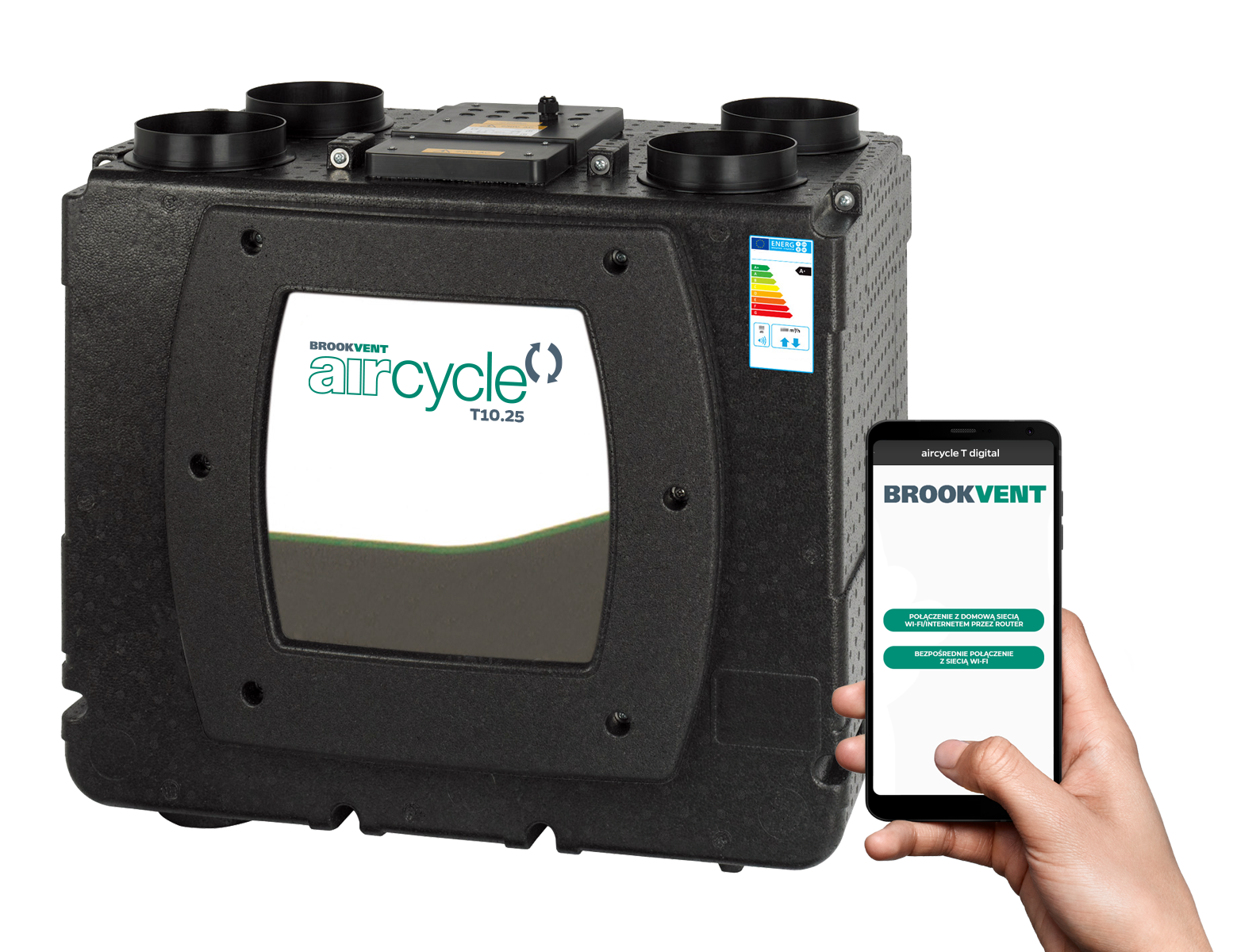
aircycle T10.25
Aircycle aircycle T10.25 range are designed to combine extremely low energy consumption, highly efficient heat recovery – up to 90% and significantly increased flow performance – up to 518 m3/h. The use of a special design of the casing made of EPP allows to reduce the weight of the device and provides very good levels of thermal insulation. Suitable for large appartments and small houses.
How does a heat recovery ventilation unit work?
Heat recovery is the process of recovering heat energy in order for it to be reused. In ventilation systems, this consists in recovering heat from the exhausted, used up air and transferring this heat to the supply air. Polluted air is extracted from rooms such as: kitchen, bathroom, toilet through a network of ventilation ducts and fresh air is blown into the living room, bedrooms. Air distribution is most often performed through diffusers connected to appropriate ducts. The system works continuously and the fresh and heated air is additionally cleaned thanks to built-in filters. Thanks to the application of a modern counter-flow heat exchanger in the heat recovery ventilation unit, where the supplied and extracted air streams are tightly separated from each other, polluted air does not get mixed with fresh air. The exchanger, by making use of temperature differences between the air streams, heats up the cooler one. The Brookvent heat recovery systems are very efficient since, depending on the AHU model, they are able to recover
even up to 93% heat.
Related Products
-

-

NovaAir anti-smog filter for wall vents.
-

L’Aircycle 5.1 est un système de récupération de chaleur à fonctionnement continu qui transfère la chaleur de l’air humide extrait des pièces humides vers l’air frais entrant, lequel est ensuite acheminé vers les pièces d’habitation. Grâce à son système de distribution d’air facile à installer, chaque pièce peut être correctement ventilée : la fonction « boost » permet d’évacuer rapidement l’excès d’humidité ou les niveaux élevés de polluants. Il offre également une installation discrète et un fonctionnement très silencieux. Convient aux grandes maisons.